investigação avançada
theHarvester: O Guia Completo de 2026 para Reconhecimento OSINT, Coleta de E-mails e Descoberta de Subdomínios
theHarvester: O Guia Completo de 2026 para Reconhecimento OSINT, Coleta de E-mails e Descoberta de Subdomínios
O theHarvester é uma das ferramentas gratuitas de OSINT mais poderosas para coleta de e-mails e descoberta de subdomínios, mas os resultados brutos são apenas o começo. Aqui está tudo o que você precisa saber para usá-lo de forma eficaz em 2026.

Alisson Moretto
Fundador do Sherlockeye

Por que o Reconhecimento de OSINT Importa Mais do Que Nunca
A pegada digital de qualquer organização ou indivíduo é maior, e mais exposta, do que a maioria das pessoas imagina. De acordo com o Relatório Anual de Exposição de Identidade SpyCloud de 2025, o usuário corporativo médio agora tem 146 registros roubados vinculados à sua identidade, um aumento impressionante de 12 vezes em relação às estimativas anteriores. Enquanto isso, pesquisas da Group-IB confirmam que os ataques de phishing aumentaram 22% em 2024, com mais de 80.000 sites de phishing identificados, muitos deles alimentados com inteligência coletada de fontes abertas antes mesmo de um único e-mail malicioso ser enviado.
Cada grande ataque cibernético, esquema de fraude ou campanha direcionada de engenharia social começa da mesma maneira: reconhecimento. Antes que os invasores enviem um e-mail de phishing, se passem por um executivo ou infiltrem-se em uma rede, eles mapeiam a presença digital do alvo usando ferramentas e dados disponíveis publicamente. Compreender como esse reconhecimento funciona não é mais opcional para equipes de segurança, investigadores de fraudes, profissionais de conformidade ou qualquer pessoa responsável por proteger ativos sensíveis.
É aí que entra o theHarvester. Como uma das ferramentas de OSINT de código aberto mais amplamente utilizadas no mundo, ele serve de base tanto para avaliações de segurança ofensiva quanto para programas defensivos de risco digital. Este guia cobre tudo o que você precisa saber sobre o theHarvester em 2026: o que ele faz, como funciona, quem deve usá-lo, suas limitações reais e quando uma plataforma mais poderosa é a escolha certa.
O que é o theHarvester?
O theHarvester é uma ferramenta de OSINT (Open Source Intelligence) de código aberto originalmente desenvolvida por Christian Martorella da equipe Edge-Security e mantida no GitHub em github.com/laramies/theHarvester. Atualmente, possui mais de 15.800 estrelas no GitHub e mais de 2.400 forks, tornando-se uma das ferramentas de reconhecimento de segurança mais estelares no ecossistema de código aberto.
A ferramenta foi projetada especificamente para a fase inicial de reconhecimento de um teste de invasão, engajamento de red team ou investigação de OSINT. Sua função principal é deceptivamente simples: dado um domínio alvo ou nome de organização, o theHarvester realiza pesquisas em dezenas de fontes de dados públicas simultaneamente e retorna uma lista consolidada de endereços de e-mail, subdomínios, endereços IP, hostnames, nomes de funcionários e URLs associados a esse alvo.
O que torna o theHarvester duradouramente popular é a sua combinação de simplicidade e abrangência. Um único comando pode pesquisar em mecanismos de pesquisa, logs de transparência de certificados, serviços de DNS e bancos de dados especializados de uma só vez, retornando inteligência estruturada em minutos ao invés de horas. Para profissionais de segurança que realizam avaliações autorizadas, ele fornece um panorama imediato do que um invasor poderia aprender sobre um alvo antes que qualquer interação direta ocorra.
É importante entender desde o início que o theHarvester é uma ferramenta de reconhecimento passivo em sua operação padrão. Ele não explora vulnerabilidades, não sonda sistemas diretamente e não realiza varredura de portas por conta própria. Ele lê o que já está disponível publicamente, o que é tanto a sua força quanto a razão pela qual é legal usá-lo em muitos contextos onde uma varredura ativa não seria.
Como o theHarvester Funciona
Em sua essência, o theHarvester opera por meio de uma arquitetura modular. Cada fonte de dados suportada possui seu próprio módulo de coleta, e os usuários podem invocar uma fonte, uma seleção de fontes ou todas as fontes de uma só vez usando uma única flag de linha de comando. A ferramenta é escrita em Python 3.12 ou superior e requer chaves de API para várias de suas integrações de dados premium, embora funcione de forma significativa apenas com fontes gratuitas.
Quando você executa uma pesquisa contra um domínio alvo, o theHarvester faz o seguinte:
Ele envia pesquisas estruturadas para cada fonte de dados selecionada, formatadas adequadamente para a API ou sintaxe de pesquisa dessa fonte.
Ele coleta resultados brutos, incluindo strings de e-mail, registros de subdomínios, intervalos de IP e dados de certificados.
Ele remove duplicatas e normaliza a saída entre todas as fontes, eliminando entradas redundantes.
Ele apresenta os resultados no terminal em tempo real e pode gerar relatórios estruturados nos formatos XML ou JSON.
A ferramenta também suporta força bruta de DNS, uma técnica ativa na qual ela tenta sistematicamente resolver nomes de subdomínios usando uma lista de palavras, descobrindo infraestruturas que podem não aparecer nos índices dos mecanismos de pesquisa ou logs de certificados. Esta é uma área onde o theHarvester ultrapassa a linha entre o reconhecimento puramente passivo e a enumeração ativa, o que tem implicações legais significativas discutidas mais adiante neste guia.
Um recurso notável que diferencia o theHarvester de simples coletores de e-mail é a sua integração com servidores de chaves PGP. Muitas organizações e indivíduos que usam criptografia de e-mail PGP registram suas chaves públicas em servidores de chaves, que são publicamente pesquisáveis. Isso significa que o theHarvester pode revelar endereços de e-mail que nunca apareceram em nenhum mecanismo de pesquisa ou vazamento de dados, tornando-o mais abrangente do que ferramentas que dependem exclusivamente de raspagem de dados web.
Principais Fontes de Dados Suportadas pelo theHarvester
O valor de qualquer ferramenta OSINT é diretamente proporcional à abrangência e qualidade de suas fontes de dados. O theHarvester realiza pesquisas em mais de 40 fontes públicas, abrangendo mecanismos de pesquisa gerais, bancos de dados de segurança especializados, plataformas de inteligência de DNS e infraestrutura de transparência de certificados. As mais significativas incluem:
Mecanismos de pesquisa e índices: Bing, Baidu, DuckDuckGo e historicamente o Google (com limite de requisições e parcialmente restrito). Estes trazem à tona endereços de e-mail e subdomínios que foram indexados a partir de páginas web públicas, anúncios de emprego, discussões em fóruns e metadados de documentos.
Logs de Transparência de Certificados: Serviços como crt.sh e CertSpotter expõem todos os certificados TLS/SSL já emitidos para um domínio, incluindo certificados para subdomínios que podem não estar mais sendo promovidos ativamente, mas que ainda existem e representam uma superfície de ataque potencial.
Shodan: O mecanismo de pesquisa de dispositivos conectados à internet indexa milhões de sistemas, revelando portas abertas, serviços expostos e infraestrutura mal configurada associada aos intervalos de IP de uma organização.
VirusTotal, URLScan e AlienVault OTX: Estas plataformas de inteligência de ameaças agregam dados históricos de varredura, registros de DNS passivo e associações maliciosas conhecidas para domínios e IPs, fornecendo um contexto que os resultados brutos de pesquisa não conseguem oferecer.
Hunter.io e Snov.io: Plataformas dedicadas à descoberta de e-mails que indexaram informações de contato profissional a partir de fontes públicas e podem retornar padrões (como nome.sobrenome@empresa.com) que ajudam investigadores a deduzir endereços válidos adicionais.
Servidores de chaves PGP: Como descrito acima, estes revelam usuários de e-mail criptografado cujos endereços podem não aparecer em nenhum outro lugar publicamente.
LinkedIn através de integrações de API específicas: Enumeração de nomes de funcionários, embora esta fonte esteja sujeita a limites frequentes de requisições e mudanças nas políticas da plataforma.
Cada fonte possui cobertura, confiabilidade e comportamento de limite de requisições diferentes, e é por isso que executar o theHarvester com todas as fontes ativadas fornece resultados significativamente mais completos do que depender de qualquer pesquisa única.
Quem Usa o theHarvester e Por Quê
Invasores de Teste (Penetration Testers) e Red Teams
O theHarvester foi construído originalmente para este público. Na fase de reconhecimento de um teste de invasão autorizado, o testador o utiliza para entender o que um invasor externo poderia descobrir sobre a organização alvo antes do início de qualquer interação. Endereços de e-mail alimentam simulações de phishing. Subdomínios revelam servidores de desenvolvimento esquecidos, ambientes de homologação e painéis de administração. Intervalos de IP definem o escopo da varredura ativa subsequente.
Equipes de Segurança Corporativa e Inteligência de Ameaças
Equipes de segurança defensiva usam o theHarvester para auditar a exposição externa de sua própria organização. Executar a ferramenta contra o seu próprio domínio periodicamente revela se endereços de e-mail foram publicados criando riscos de phishing, se subdomínios de "shadow IT" foram criados sem revisão de segurança e se certificados foram emitidos para infraestruturas que você não sabia que existiam.
Investigadores de Fraude e Profissionais de Due Diligence
Ao investigar uma contraparte suspeita, fornecedor ou potencial parceiro de negócios, o theHarvester ajuda a estabelecer qual infraestrutura digital eles realmente operam. Uma empresa que afirma estar no mercado há dez anos, mas não apresenta histórico de subdomínio, não tem de-mails indexados e possui um domínio registrado no mês passado representa um sinal de alerta significativo. Investigadores de fraude usam esse tipo de reconhecimento passivo para revelar inconsistências antes de comprometer recursos em investigações mais profundas.
Equipes Jurídicas e de Conformidade
Advogados que realizam investigações pré-litígio, oficiais de conformidade que verificam alegações de fornecedores terceirizados e analistas de PLD (Prevenção à Lavagem de Dinheiro) que investigam estruturas corporativas usam ferramentas de OSINT para mapear pegadas digitais que informam seus processos formais de due diligence.
Pesquisadores de Segurança e Jornalistas
Pesquisadores que investigam atores de ameaças específicos, infraestrutura comprometida ou má conduta corporativa usam o theHarvester como uma ferramenta de mapeamento de estágio inicial antes de estreitar sua investigação com técnicas mais direcionadas.
Guia Passo a Passo: Usando o theHarvester para Investigações de OSINT
Esta seção cobre o processo completo, desde a instalação até a análise, escrito para profissionais que realizam investigações autorizadas.
Passo 1: Instalação
O theHarvester requer Python 3.12 ou superior. O método de instalação recomendado é clonar diretamente do repositório oficial:
git clone https://github.com/laramies/theHarvester
cd theHarvester
pip3 install -r requirements/base.txt
Para usuários do Kali Linux, o theHarvester já vem pré-instalado e pode ser invocado diretamente. A implementação baseada em Docker também é suportada para equipes que preferem ferramentas em containers.
Passo 2: Configurar Chaves de API
Antes de executar qualquer pesquisa, abra o arquivo de configuração api-keys.yaml e adicione as chaves de API para as fontes de dados que pretende usar. Contas gratuitas em plataformas como Hunter.io, Shodan, VirusTotal e SecurityTrails expandem drasticamente o volume e a qualidade dos resultados. Sem chaves de API, o theHarvester ainda funciona, mas os resultados ficam limitados a fontes que permitem pesquisas não autenticadas.
Passo 3: Execute sua Primeira Pesquisa
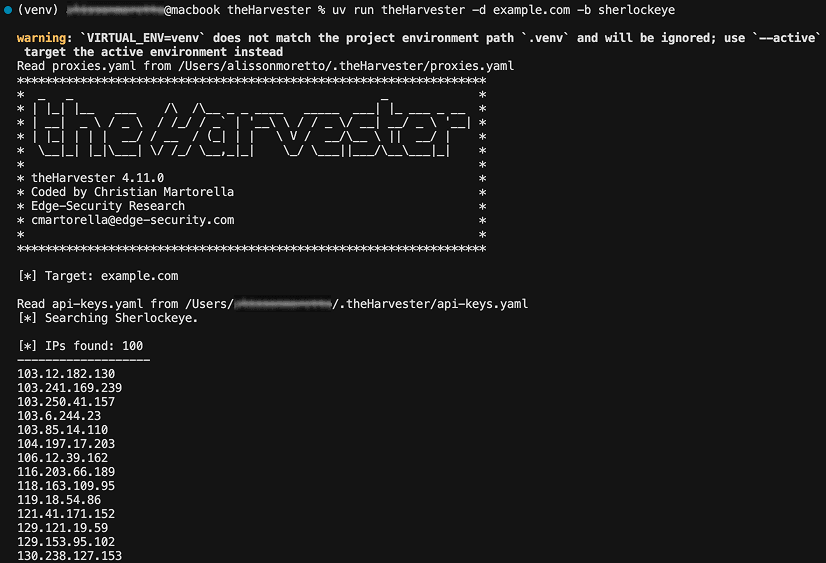
A sintaxe básica é:
python3 theHarvester.py -d [dominio-alvo] -b [fontes] -l [limite]
Por exemplo, para pesquisar em todas as fontes disponíveis contra um domínio alvo com um limite de 500 resultados:
python3 theHarvester.py -d exemplo.com -b all -l 500
Para pesquisar apenas em fontes específicas como o Bing e o crt.sh:
python3 theHarvester.py -d exemplo.com -b bing,crtsh -l 200
Passo 4: Habilitar Força Bruta de DNS (Quando Autorizado)
Para testes de invasão autorizados onde a enumeração ativa está dentro do escopo, adicione a flag -f para salvar os resultados e use -c para habilitar a força bruta de DNS:
python3 theHarvester.py -d exemplo.com -b all -c -f output_report
Importante: A força bruta de DNS gera tráfego de rede real direcionado à infraestrutura de DNS do alvo. Use isso apenas em domínios de sua propriedade ou para os quais possua autorização expressa por escrito para testar.
Passo 5: Exportar e Analisar Resultados
O theHarvester pode exportar resultados nos formatos XML e JSON, adequados para integração em plataformas SIEM, sistemas de gerenciamento de investigação ou processamento posterior com ferramentas como Maltego ou SpiderFoot. Use a flag -f seguida do nome do arquivo desejado, e o theHarvester gerará ambos os formatos automaticamente.
Passo 6: Fazer o Cruzamento de Dados e Ir Mais Fundo com uma Plataforma Baseada em IA
A saída bruta do theHarvester é um ponto de partida, não um produto de inteligência finalizado. Endereços de e-mail precisam ser correlacionados com bancos de dados de vazamentos. Subdomínios precisam ser checados contra fontes de inteligência de ameaças. Endereços IP precisam ser associados a padrões históricos de hospedagem. Nomes de funcionários precisam ser cruzados com redes profissionais, registros judiciais e arquivos de órgãos reguladores.
Para investigadores e equipes de segurança que precisam desse nível de profundidade sem ter que construir um fluxo de trabalho manual de cruzamento de referências, o Sherlockeye foi construído precisamente para essa transição. O Sherlockeye pesquisa em centenas de fontes abertas ao mesmo tempo, aplica cruzamento de dados com IA para revelar conexões que as saídas de ferramentas individuais perderiam, e retorna perfis digitais completos abrangendo endereços de e-mail, domínios, estruturas societárias, números de telefone e ativos digitais associados. Todas as pesquisas são criptografadas de ponta a ponta com política de retenção máxima de dados de 30 dias, tornando-o apropriado para investigações profissionais onde os padrões de tratamento de dados são fundamentais. Enquanto o theHarvester oferece dados brutos, o Sherlockeye entrega a imagem sintetizada.
Passo 7: Documente suas Descobertas
Investigações profissionais requerem documentação. Registre os comandos exatos utilizados, a data e a hora de cada pesquisa, as fontes pesquisadas e os resultados obtidos. Isso cria uma cadeia de custódia auditável de evidências e garante a reprodutibilidade caso os resultados sejam contestados no futuro ou precisem ser apresentados a assessores jurídicos, reguladores ou à diretoria executiva.
Sinais de Alerta para Ficar Atento nos Resultados do theHarvester
Saber interpretar os resultados do theHarvester é tão importante quanto saber gerá-los. Vários padrões nos resultados devem desencadear investigações imediatas de acompanhamento.
Subdomínios inesperados: Se uma varredura do seu próprio domínio retornar subdomínios que você não reconhece, particularmente aqueles contendo palavras como "admin", "staging", "dev", "backup" ou "internal", estes representam potenciais shadow IT ou infraestruturas esquecidas que podem não estar sob monitoramento ativo de segurança.
Endereços de e-mail de domínios inesperados: Se uma pesquisa retornar endereços de e-mail de funcionários em domínios diferentes do domínio corporativo principal, isso pode indicar uma empresa adquirida recentemente, um domínio alternativo legítimo ou, em investigações adversárias, um sinal de falsificação de identidade ou clonagem de marca (brandjacking).
Certificados emitidos por autoridades inesperadas ou para subdomínios não previstos: Logs de transparência de certificados às vezes revelam infraestruturas criadas por atacantes que registraram domínios parecidos (ex: "cornpany.com" em vez de "company.com") e obtiveram certificados TLS válidos para fazer com que seus sites de phishing pareçam legítimos.
Resultados do Shodan mostrando portas administrativas abertas: Se o theHarvester retornar endereços IP associados ao seu alvo e uma pesquisa no Shodan contra esses IPs revelar portas RDP, SSH ou de banco de dados abertas, essas são preocupações imediatas de segurança que exigem correção.
Ausência de dados esperados: Uma empresa que alega ter uma longa história, mas que não mostra nenhum e-mail indexado, nenhum histórico de certificado e nenhum registro de subdomínio pode ser uma identidade recém-construída projetada para parecer consolidada. Em contextos de fraude e due diligence, uma pegada de OSINT suspeitamente limpa é tão significativa quanto uma alarmante.
Limitações do theHarvester
Compreender o que o theHarvester não pode fazer é essencial para estabelecer expectativas realistas e construir um fluxo de trabalho de investigação completo.
Limite de requisições e disponibilidade de fontes: Muitas das melhores fontes de dados impõem limites rígidos de requisições para acessos de API gratuitos. Uma pesquisa que consulte todas as fontes simultaneamente atingirá frequentemente esses limites, retornando resultados incompletos sem qualquer indicação de que os dados foram truncados. Esta é uma limitação persistente que não pode ser totalmente resolvida sem assinaturas pagas de API em múltiplos serviços.
Falta de correlação de dados ou resolução de entidades: O theHarvester retorna listas de e-mails, subdomínios e IPs. Ele não informa quais endereços de e-mail pertencem à mesma pessoa, quais subdomínios hospedam aplicações relacionadas ou como intervalos de IP se conectam a entidades corporativas. O pós-processamento com ferramentas adicionais é sempre necessário para uma análise significativa.
Lacunas na indexação de mecanismos de pesquisa: Os resultados obtidos por varredura na web estão limitados àquilo que os mecanismos de pesquisa indexaram, o que exclui partes significativas da web de conteúdo protegido por senha, páginas sem links, infraestrutura da dark web e conteúdo removido da visualização pública após ter sido publicado.
Sem inteligência de redes sociais ou nível pessoal: O theHarvester é focado no reconhecimento em nível de domínio e organização. Ele não pesquisa sistematicamente perfis de redes sociais, registros públicos, processos judiciais, registros de empresas ou outros tipos de dados relevantes para investigações de OSINT focadas em pessoas físicas.
Apenas interface de linha de comando: O theHarvester não possui interface gráfica, o que limita sua acessibilidade para investigadores não técnicos. Equipes que incluem profissionais de compliance, profissionais jurídicos ou analistas de fraude sem proficiência em linha de comando precisarão construir fluxos de suporte ou usar plataformas que abstraem a camada técnica.
Atualização dos dados: Os resultados refletem o que está atualmente indexado ou disponível nas fontes pesquisadas. Dados históricos, como quais subdomínios existiam há dois anos ou quais endereços de e-mail estavam associados a um domínio antes de ele mudar de proprietário, não são acessíveis apenas através do theHarvester.
Considerações Legais e Éticas
Usar qualquer ferramenta de OSINT, incluindo o theHarvester, sem compreender o contexto legal representa um risco real. A coleta passiva de informações disponíveis publicamente é geralmente legal na maioria das jurisdições, mas vários limites importantes se aplicam.
A autorização é obrigatória para técnicas ativas: Força bruta de DNS e qualquer técnica que gere tráfego de rede direto em direção a um sistema alvo só devem ser conduzidas com autorização expressa por escrito do proprietário do domínio. Varreduras ativas não autorizadas podem violar a Lei de Fraude e Abuso Informático (CFAA) nos Estados Unidos, a Lei de Abuso de Computadores no Reino Unido e estatutos equivalentes na União Europeia e em outras jurisdições. "Está disponível publicamente" não é uma defesa quando você está gerando tráfego direto de sondagem.
A finalidade importa sob as leis de proteção de dados: Em jurisdições governadas pela GDPR, pela LGPD (Lei Geral de Proteção de Dados do Brasil) ou estruturas semelhantes, coletar dados pessoais, incluindo endereços de e-mail profissionais, requer uma base legal. Pesquisa de segurança, prevenção a fraudes e investigações jurídicas podem constituir interesses legítimos, mas essa determinação exige uma análise cuidadosa. Usar ferramentas de OSINT para compilar perfis pessoais com fins comerciais sem uma base legal clara gera exposição regulatória.
Manuseio e retenção de resultados: Os dados coletados por meio de investigações de OSINT devem estar sujeitos aos mesmos controles de segurança da informação aplicados a qualquer outra inteligência sensível. Armazene os resultados em sistemas criptografados, limite o acesso ao pessoal com necessidade legítima e estabeleça políticas claras de retenção. Muitas investigações profissionais foram comprometidas pelo manuseio inseguro da inteligência coletada durante o reconhecimento.
Considerações éticas além dos patamares legais mínimos: A permissividade legal é o piso, não o teto. Realizar investigações de OSINT contra pessoas físicas sem um propósito profissional legítimo, mesmo utilizando informações inteiramente públicas, levanta sérias questões éticas. A comunidade profissional de OSINT enfatiza cada vez mais a proporcionalidade: a profundidade da investigação deve corresponder à necessidade legítima que a justifica.
Perguntas Frequentes
O que exatamente o theHarvester coleta?
O theHarvester coleta endereços de e-mail, subdomínios, hostnames, endereços IP, nomes de funcionários e URLs associados a um domínio ou organização alvo. Ele reúne essas informações realizando pesquisas em mais de 40 fontes públicas simultaneamente, incluindo mecanismos de pesquisa, logs de transparência de certificados, Shodan, servidores de chaves PGP e plataformas dedicadas de inteligência de e-mail. Os dados específicos retornados dependem de quais fontes são pesquisadas e se as chaves de API foram configuradas para integrações premium.
É legal usar o theHarvester?
Usar o theHarvester em seu modo passivo padrão, pesquisando fontes de dados disponíveis publicamente, é geralmente legal na maioria das jurisdições quando feito para fins legítimos, como testes de segurança autorizados, investigações de fraude ou due diligence. No entanto, recursos ativos como a força bruta de DNS geram tráfego de rede direto em direção aos sistemas alvo e só devem ser usados com autorização expressa por escrito. Leis como a CFAA nos EUA e a Computer Misuse Act no Reino Unido podem ser aplicadas ao reconhecimento ativo não autorizado, independentemente da ferramenta utilizada.
Qual é a diferença entre o theHarvester e o Google Dorking?
O Google dorking utiliza operadores de pesquisa avançados para extrair tipos específicos de informações do índice do Google, como arquivos expostos, páginas de login ou endereços de e-mail. O theHarvester automatiza pesquisas semelhantes em múltiplos mecanismos de pesquisa ao mesmo tempo e se estende além deles para incluir bancos de dados de certificados, feeds de inteligência de ameaças, Shodan e servidores de chaves PGP. A abrangência das fontes e a normalização automatizada dos resultados tornam o theHarvester significativamente mais completo para reconhecimento no nível de domínio do que o dorking manual.
O theHarvester pode encontrar informações sobre pessoas físicas, e não apenas organizações?
O theHarvester foi projetado principalmente para o reconhecimento detalhado de domínios e organizações. Ele pode revelar endereços de e-mail individuais e nomes associados a um domínio, mas não pesquisa de forma sistemática perfis em redes sociais, registros públicos, processos judiciais, registros de propriedade ou outras fontes de dados focadas em pessoas. Para investigações que visam indivíduos em vez de organizações, plataformas de OSINT dedicadas a pesquisas de pessoas ou pesquisas em registros públicos são mais adequadas.
Como obtenho melhores resultados com o theHarvester?
A melhoria mais significativa vem da configuração de chaves de API para fontes de dados premium, contendo Shodan, Hunter.io, VirusTotal, SecurityTrails e plataformas semelhantes. Executar a busca com todas as fontes ativadas, em vez de uma única fonte, também aumenta drasticamente a cobertura. Adicionalmente, realizar múltiplas pesquisas direcionadas usando variações do nome da organização, pseudônimos de domínio conhecidos e domínios de subsidiárias, em vez de uma única pesquisa contra o domínio principal, revelará infraestruturas que uma consulta única deixaria passar.
O theHarvester funciona contra qualquer domínio?
O theHarvester funciona em relação a qualquer domínio registrado publicamente, mas a riqueza dos resultados varia significativamente. Organizações grandes e consolidadas, com anos de presença na web, gerarão resultados extensos, incluindo centenas de endereços de e-mail, dezenas de subdomínios e dados históricos de infraestrutura. Um domínio registrado recentemente ou uma organização pequena com presença mínima na web podem retornar poucos resultados. No contexto de investigação de fraudes, conforme mencionado anteriormente, resultados suspeitosamente mínimos podem ser, por si só, uma descoberta significativa.
Com que frequência as organizações devem rodar o theHarvester contra seus próprios domínios?
As equipes de segurança devem realizar o reconhecimento de OSINT contra as suas próprias infraestruturas de forma regular, idealmente pelo menos a cada trimestre e, adicionalmente, após mudanças significativas, tais como aquisições, rebranding, lançamentos de novos produtos ou transições de liderança executiva. Grandes eventos corporativos geram de forma confiável novas pegadas digitais, incluindo novos domínios, novos padrões de e-mail e novos registros de funcionários que podem não ter sido capturados em varreduras anteriores. Plataformas de monitoramento contínuo que automatizam este processo tornaram-se cada vez mais comuns nos programas de segurança empresarial por este motivo.
O que eu devo fazer com os resultados do theHarvester após coletá-los?
A saída de dados brutos do theHarvester requer análise e cruzamento de dados para ser útil. Os endereços de e-mail devem ser cruzados com bancos de dados de vazamentos. Os subdomínios devem ser analisados quanto a serviços inesperados ou inseguros. Os endereços IP devem ser correlacionados com feeds de inteligência de ameaças para identificar associações maliciosas conhecidas. Os nomes de funcionários podem ser verificados em redes profissionais para avaliar o nível de exposição. Para avaliações de segurança, os resultados devem alimentar um plano de remediação prioritário. Para investigações, eles devem ser documentados e cruzados com outras fontes de inteligência para traçar um panorama completo.
Conclusão
O theHarvester continua sendo uma das ferramentas mais valiosas no arsenal do profissional de OSINT justamente por ser honesto sobre sua própria proposta: um agregador rápido, flexível e de múltiplas fontes para reconhecimento no nível de domínio que lhe dá uma visão clara da infraestrutura digital visível publicamente em minutos. Para profissionais autorizados de testes de invasão, ele mapeia a superfície de ataque externa antes do início de qualquer teste ativo. Para equipes de segurança, ele revela exposições não intencionais. Para investigadores de fraudes e profissionais de due diligence, ele traz à tona inconsistências digitais que exigem uma análise mais profunda.
Suas limitações são tão reais quanto seus pontos fortes. O theHarvester não correlaciona entidades, não investiga indivíduos, não acessa dados históricos e não interpreta o que encontra. Uma lista de e-mails e subdomínios é matéria-prima, não inteligência finalizada. O trabalho de dar sentido a essa matéria-prima, conectá-la a outros dados, identificar padrões e tirar conclusões investigativas exige ferramentas e análises adicionais.
Para profissionais que precisam evoluir de sinais brutos para perfis digitais completos e sintetizados por IA, sem criar do zero um fluxo complexo envolvendo várias ferramentas, o Sherlockeye fornece essa capacidade com rigor profissional. Quer a sua investigação comece com um domínio, um endereço de e-mail, um número de telefone, uma pessoa ou uma empresa, o Sherlockeye pesquisa em centenas de fontes abertas ao mesmo tempo e retorna inteligência cruzada sob uma política de criptografia estrita e retenção mínima de dados projetada para investigações profissionais. Inicie sua pesquisa em sherlockeye.io.
Tags: theHarvester, ferramentas OSINT, coleta de e-mails, enumeração de subdomínios, inteligência de fontes abertas, reconhecimento de teste de invasão, investigação de pegada digital, OSINT de segurança cibernética, investigação de domínios, OSINT 2026
Por que o Reconhecimento de OSINT Importa Mais do Que Nunca
A pegada digital de qualquer organização ou indivíduo é maior, e mais exposta, do que a maioria das pessoas imagina. De acordo com o Relatório Anual de Exposição de Identidade SpyCloud de 2025, o usuário corporativo médio agora tem 146 registros roubados vinculados à sua identidade, um aumento impressionante de 12 vezes em relação às estimativas anteriores. Enquanto isso, pesquisas da Group-IB confirmam que os ataques de phishing aumentaram 22% em 2024, com mais de 80.000 sites de phishing identificados, muitos deles alimentados com inteligência coletada de fontes abertas antes mesmo de um único e-mail malicioso ser enviado.
Cada grande ataque cibernético, esquema de fraude ou campanha direcionada de engenharia social começa da mesma maneira: reconhecimento. Antes que os invasores enviem um e-mail de phishing, se passem por um executivo ou infiltrem-se em uma rede, eles mapeiam a presença digital do alvo usando ferramentas e dados disponíveis publicamente. Compreender como esse reconhecimento funciona não é mais opcional para equipes de segurança, investigadores de fraudes, profissionais de conformidade ou qualquer pessoa responsável por proteger ativos sensíveis.
É aí que entra o theHarvester. Como uma das ferramentas de OSINT de código aberto mais amplamente utilizadas no mundo, ele serve de base tanto para avaliações de segurança ofensiva quanto para programas defensivos de risco digital. Este guia cobre tudo o que você precisa saber sobre o theHarvester em 2026: o que ele faz, como funciona, quem deve usá-lo, suas limitações reais e quando uma plataforma mais poderosa é a escolha certa.
O que é o theHarvester?
O theHarvester é uma ferramenta de OSINT (Open Source Intelligence) de código aberto originalmente desenvolvida por Christian Martorella da equipe Edge-Security e mantida no GitHub em github.com/laramies/theHarvester. Atualmente, possui mais de 15.800 estrelas no GitHub e mais de 2.400 forks, tornando-se uma das ferramentas de reconhecimento de segurança mais estelares no ecossistema de código aberto.
A ferramenta foi projetada especificamente para a fase inicial de reconhecimento de um teste de invasão, engajamento de red team ou investigação de OSINT. Sua função principal é deceptivamente simples: dado um domínio alvo ou nome de organização, o theHarvester realiza pesquisas em dezenas de fontes de dados públicas simultaneamente e retorna uma lista consolidada de endereços de e-mail, subdomínios, endereços IP, hostnames, nomes de funcionários e URLs associados a esse alvo.
O que torna o theHarvester duradouramente popular é a sua combinação de simplicidade e abrangência. Um único comando pode pesquisar em mecanismos de pesquisa, logs de transparência de certificados, serviços de DNS e bancos de dados especializados de uma só vez, retornando inteligência estruturada em minutos ao invés de horas. Para profissionais de segurança que realizam avaliações autorizadas, ele fornece um panorama imediato do que um invasor poderia aprender sobre um alvo antes que qualquer interação direta ocorra.
É importante entender desde o início que o theHarvester é uma ferramenta de reconhecimento passivo em sua operação padrão. Ele não explora vulnerabilidades, não sonda sistemas diretamente e não realiza varredura de portas por conta própria. Ele lê o que já está disponível publicamente, o que é tanto a sua força quanto a razão pela qual é legal usá-lo em muitos contextos onde uma varredura ativa não seria.
Como o theHarvester Funciona
Em sua essência, o theHarvester opera por meio de uma arquitetura modular. Cada fonte de dados suportada possui seu próprio módulo de coleta, e os usuários podem invocar uma fonte, uma seleção de fontes ou todas as fontes de uma só vez usando uma única flag de linha de comando. A ferramenta é escrita em Python 3.12 ou superior e requer chaves de API para várias de suas integrações de dados premium, embora funcione de forma significativa apenas com fontes gratuitas.
Quando você executa uma pesquisa contra um domínio alvo, o theHarvester faz o seguinte:
Ele envia pesquisas estruturadas para cada fonte de dados selecionada, formatadas adequadamente para a API ou sintaxe de pesquisa dessa fonte.
Ele coleta resultados brutos, incluindo strings de e-mail, registros de subdomínios, intervalos de IP e dados de certificados.
Ele remove duplicatas e normaliza a saída entre todas as fontes, eliminando entradas redundantes.
Ele apresenta os resultados no terminal em tempo real e pode gerar relatórios estruturados nos formatos XML ou JSON.
A ferramenta também suporta força bruta de DNS, uma técnica ativa na qual ela tenta sistematicamente resolver nomes de subdomínios usando uma lista de palavras, descobrindo infraestruturas que podem não aparecer nos índices dos mecanismos de pesquisa ou logs de certificados. Esta é uma área onde o theHarvester ultrapassa a linha entre o reconhecimento puramente passivo e a enumeração ativa, o que tem implicações legais significativas discutidas mais adiante neste guia.
Um recurso notável que diferencia o theHarvester de simples coletores de e-mail é a sua integração com servidores de chaves PGP. Muitas organizações e indivíduos que usam criptografia de e-mail PGP registram suas chaves públicas em servidores de chaves, que são publicamente pesquisáveis. Isso significa que o theHarvester pode revelar endereços de e-mail que nunca apareceram em nenhum mecanismo de pesquisa ou vazamento de dados, tornando-o mais abrangente do que ferramentas que dependem exclusivamente de raspagem de dados web.
Principais Fontes de Dados Suportadas pelo theHarvester
O valor de qualquer ferramenta OSINT é diretamente proporcional à abrangência e qualidade de suas fontes de dados. O theHarvester realiza pesquisas em mais de 40 fontes públicas, abrangendo mecanismos de pesquisa gerais, bancos de dados de segurança especializados, plataformas de inteligência de DNS e infraestrutura de transparência de certificados. As mais significativas incluem:
Mecanismos de pesquisa e índices: Bing, Baidu, DuckDuckGo e historicamente o Google (com limite de requisições e parcialmente restrito). Estes trazem à tona endereços de e-mail e subdomínios que foram indexados a partir de páginas web públicas, anúncios de emprego, discussões em fóruns e metadados de documentos.
Logs de Transparência de Certificados: Serviços como crt.sh e CertSpotter expõem todos os certificados TLS/SSL já emitidos para um domínio, incluindo certificados para subdomínios que podem não estar mais sendo promovidos ativamente, mas que ainda existem e representam uma superfície de ataque potencial.
Shodan: O mecanismo de pesquisa de dispositivos conectados à internet indexa milhões de sistemas, revelando portas abertas, serviços expostos e infraestrutura mal configurada associada aos intervalos de IP de uma organização.
VirusTotal, URLScan e AlienVault OTX: Estas plataformas de inteligência de ameaças agregam dados históricos de varredura, registros de DNS passivo e associações maliciosas conhecidas para domínios e IPs, fornecendo um contexto que os resultados brutos de pesquisa não conseguem oferecer.
Hunter.io e Snov.io: Plataformas dedicadas à descoberta de e-mails que indexaram informações de contato profissional a partir de fontes públicas e podem retornar padrões (como nome.sobrenome@empresa.com) que ajudam investigadores a deduzir endereços válidos adicionais.
Servidores de chaves PGP: Como descrito acima, estes revelam usuários de e-mail criptografado cujos endereços podem não aparecer em nenhum outro lugar publicamente.
LinkedIn através de integrações de API específicas: Enumeração de nomes de funcionários, embora esta fonte esteja sujeita a limites frequentes de requisições e mudanças nas políticas da plataforma.
Cada fonte possui cobertura, confiabilidade e comportamento de limite de requisições diferentes, e é por isso que executar o theHarvester com todas as fontes ativadas fornece resultados significativamente mais completos do que depender de qualquer pesquisa única.
Quem Usa o theHarvester e Por Quê
Invasores de Teste (Penetration Testers) e Red Teams
O theHarvester foi construído originalmente para este público. Na fase de reconhecimento de um teste de invasão autorizado, o testador o utiliza para entender o que um invasor externo poderia descobrir sobre a organização alvo antes do início de qualquer interação. Endereços de e-mail alimentam simulações de phishing. Subdomínios revelam servidores de desenvolvimento esquecidos, ambientes de homologação e painéis de administração. Intervalos de IP definem o escopo da varredura ativa subsequente.
Equipes de Segurança Corporativa e Inteligência de Ameaças
Equipes de segurança defensiva usam o theHarvester para auditar a exposição externa de sua própria organização. Executar a ferramenta contra o seu próprio domínio periodicamente revela se endereços de e-mail foram publicados criando riscos de phishing, se subdomínios de "shadow IT" foram criados sem revisão de segurança e se certificados foram emitidos para infraestruturas que você não sabia que existiam.
Investigadores de Fraude e Profissionais de Due Diligence
Ao investigar uma contraparte suspeita, fornecedor ou potencial parceiro de negócios, o theHarvester ajuda a estabelecer qual infraestrutura digital eles realmente operam. Uma empresa que afirma estar no mercado há dez anos, mas não apresenta histórico de subdomínio, não tem de-mails indexados e possui um domínio registrado no mês passado representa um sinal de alerta significativo. Investigadores de fraude usam esse tipo de reconhecimento passivo para revelar inconsistências antes de comprometer recursos em investigações mais profundas.
Equipes Jurídicas e de Conformidade
Advogados que realizam investigações pré-litígio, oficiais de conformidade que verificam alegações de fornecedores terceirizados e analistas de PLD (Prevenção à Lavagem de Dinheiro) que investigam estruturas corporativas usam ferramentas de OSINT para mapear pegadas digitais que informam seus processos formais de due diligence.
Pesquisadores de Segurança e Jornalistas
Pesquisadores que investigam atores de ameaças específicos, infraestrutura comprometida ou má conduta corporativa usam o theHarvester como uma ferramenta de mapeamento de estágio inicial antes de estreitar sua investigação com técnicas mais direcionadas.
Guia Passo a Passo: Usando o theHarvester para Investigações de OSINT
Esta seção cobre o processo completo, desde a instalação até a análise, escrito para profissionais que realizam investigações autorizadas.
Passo 1: Instalação
O theHarvester requer Python 3.12 ou superior. O método de instalação recomendado é clonar diretamente do repositório oficial:
git clone https://github.com/laramies/theHarvester
cd theHarvester
pip3 install -r requirements/base.txt
Para usuários do Kali Linux, o theHarvester já vem pré-instalado e pode ser invocado diretamente. A implementação baseada em Docker também é suportada para equipes que preferem ferramentas em containers.
Passo 2: Configurar Chaves de API
Antes de executar qualquer pesquisa, abra o arquivo de configuração api-keys.yaml e adicione as chaves de API para as fontes de dados que pretende usar. Contas gratuitas em plataformas como Hunter.io, Shodan, VirusTotal e SecurityTrails expandem drasticamente o volume e a qualidade dos resultados. Sem chaves de API, o theHarvester ainda funciona, mas os resultados ficam limitados a fontes que permitem pesquisas não autenticadas.
Passo 3: Execute sua Primeira Pesquisa
A sintaxe básica é:
python3 theHarvester.py -d [dominio-alvo] -b [fontes] -l [limite]
Por exemplo, para pesquisar em todas as fontes disponíveis contra um domínio alvo com um limite de 500 resultados:
python3 theHarvester.py -d exemplo.com -b all -l 500
Para pesquisar apenas em fontes específicas como o Bing e o crt.sh:
python3 theHarvester.py -d exemplo.com -b bing,crtsh -l 200
Passo 4: Habilitar Força Bruta de DNS (Quando Autorizado)
Para testes de invasão autorizados onde a enumeração ativa está dentro do escopo, adicione a flag -f para salvar os resultados e use -c para habilitar a força bruta de DNS:
python3 theHarvester.py -d exemplo.com -b all -c -f output_report
Importante: A força bruta de DNS gera tráfego de rede real direcionado à infraestrutura de DNS do alvo. Use isso apenas em domínios de sua propriedade ou para os quais possua autorização expressa por escrito para testar.
Passo 5: Exportar e Analisar Resultados
O theHarvester pode exportar resultados nos formatos XML e JSON, adequados para integração em plataformas SIEM, sistemas de gerenciamento de investigação ou processamento posterior com ferramentas como Maltego ou SpiderFoot. Use a flag -f seguida do nome do arquivo desejado, e o theHarvester gerará ambos os formatos automaticamente.
Passo 6: Fazer o Cruzamento de Dados e Ir Mais Fundo com uma Plataforma Baseada em IA
A saída bruta do theHarvester é um ponto de partida, não um produto de inteligência finalizado. Endereços de e-mail precisam ser correlacionados com bancos de dados de vazamentos. Subdomínios precisam ser checados contra fontes de inteligência de ameaças. Endereços IP precisam ser associados a padrões históricos de hospedagem. Nomes de funcionários precisam ser cruzados com redes profissionais, registros judiciais e arquivos de órgãos reguladores.
Para investigadores e equipes de segurança que precisam desse nível de profundidade sem ter que construir um fluxo de trabalho manual de cruzamento de referências, o Sherlockeye foi construído precisamente para essa transição. O Sherlockeye pesquisa em centenas de fontes abertas ao mesmo tempo, aplica cruzamento de dados com IA para revelar conexões que as saídas de ferramentas individuais perderiam, e retorna perfis digitais completos abrangendo endereços de e-mail, domínios, estruturas societárias, números de telefone e ativos digitais associados. Todas as pesquisas são criptografadas de ponta a ponta com política de retenção máxima de dados de 30 dias, tornando-o apropriado para investigações profissionais onde os padrões de tratamento de dados são fundamentais. Enquanto o theHarvester oferece dados brutos, o Sherlockeye entrega a imagem sintetizada.
Passo 7: Documente suas Descobertas
Investigações profissionais requerem documentação. Registre os comandos exatos utilizados, a data e a hora de cada pesquisa, as fontes pesquisadas e os resultados obtidos. Isso cria uma cadeia de custódia auditável de evidências e garante a reprodutibilidade caso os resultados sejam contestados no futuro ou precisem ser apresentados a assessores jurídicos, reguladores ou à diretoria executiva.
Sinais de Alerta para Ficar Atento nos Resultados do theHarvester
Saber interpretar os resultados do theHarvester é tão importante quanto saber gerá-los. Vários padrões nos resultados devem desencadear investigações imediatas de acompanhamento.
Subdomínios inesperados: Se uma varredura do seu próprio domínio retornar subdomínios que você não reconhece, particularmente aqueles contendo palavras como "admin", "staging", "dev", "backup" ou "internal", estes representam potenciais shadow IT ou infraestruturas esquecidas que podem não estar sob monitoramento ativo de segurança.
Endereços de e-mail de domínios inesperados: Se uma pesquisa retornar endereços de e-mail de funcionários em domínios diferentes do domínio corporativo principal, isso pode indicar uma empresa adquirida recentemente, um domínio alternativo legítimo ou, em investigações adversárias, um sinal de falsificação de identidade ou clonagem de marca (brandjacking).
Certificados emitidos por autoridades inesperadas ou para subdomínios não previstos: Logs de transparência de certificados às vezes revelam infraestruturas criadas por atacantes que registraram domínios parecidos (ex: "cornpany.com" em vez de "company.com") e obtiveram certificados TLS válidos para fazer com que seus sites de phishing pareçam legítimos.
Resultados do Shodan mostrando portas administrativas abertas: Se o theHarvester retornar endereços IP associados ao seu alvo e uma pesquisa no Shodan contra esses IPs revelar portas RDP, SSH ou de banco de dados abertas, essas são preocupações imediatas de segurança que exigem correção.
Ausência de dados esperados: Uma empresa que alega ter uma longa história, mas que não mostra nenhum e-mail indexado, nenhum histórico de certificado e nenhum registro de subdomínio pode ser uma identidade recém-construída projetada para parecer consolidada. Em contextos de fraude e due diligence, uma pegada de OSINT suspeitamente limpa é tão significativa quanto uma alarmante.
Limitações do theHarvester
Compreender o que o theHarvester não pode fazer é essencial para estabelecer expectativas realistas e construir um fluxo de trabalho de investigação completo.
Limite de requisições e disponibilidade de fontes: Muitas das melhores fontes de dados impõem limites rígidos de requisições para acessos de API gratuitos. Uma pesquisa que consulte todas as fontes simultaneamente atingirá frequentemente esses limites, retornando resultados incompletos sem qualquer indicação de que os dados foram truncados. Esta é uma limitação persistente que não pode ser totalmente resolvida sem assinaturas pagas de API em múltiplos serviços.
Falta de correlação de dados ou resolução de entidades: O theHarvester retorna listas de e-mails, subdomínios e IPs. Ele não informa quais endereços de e-mail pertencem à mesma pessoa, quais subdomínios hospedam aplicações relacionadas ou como intervalos de IP se conectam a entidades corporativas. O pós-processamento com ferramentas adicionais é sempre necessário para uma análise significativa.
Lacunas na indexação de mecanismos de pesquisa: Os resultados obtidos por varredura na web estão limitados àquilo que os mecanismos de pesquisa indexaram, o que exclui partes significativas da web de conteúdo protegido por senha, páginas sem links, infraestrutura da dark web e conteúdo removido da visualização pública após ter sido publicado.
Sem inteligência de redes sociais ou nível pessoal: O theHarvester é focado no reconhecimento em nível de domínio e organização. Ele não pesquisa sistematicamente perfis de redes sociais, registros públicos, processos judiciais, registros de empresas ou outros tipos de dados relevantes para investigações de OSINT focadas em pessoas físicas.
Apenas interface de linha de comando: O theHarvester não possui interface gráfica, o que limita sua acessibilidade para investigadores não técnicos. Equipes que incluem profissionais de compliance, profissionais jurídicos ou analistas de fraude sem proficiência em linha de comando precisarão construir fluxos de suporte ou usar plataformas que abstraem a camada técnica.
Atualização dos dados: Os resultados refletem o que está atualmente indexado ou disponível nas fontes pesquisadas. Dados históricos, como quais subdomínios existiam há dois anos ou quais endereços de e-mail estavam associados a um domínio antes de ele mudar de proprietário, não são acessíveis apenas através do theHarvester.
Considerações Legais e Éticas
Usar qualquer ferramenta de OSINT, incluindo o theHarvester, sem compreender o contexto legal representa um risco real. A coleta passiva de informações disponíveis publicamente é geralmente legal na maioria das jurisdições, mas vários limites importantes se aplicam.
A autorização é obrigatória para técnicas ativas: Força bruta de DNS e qualquer técnica que gere tráfego de rede direto em direção a um sistema alvo só devem ser conduzidas com autorização expressa por escrito do proprietário do domínio. Varreduras ativas não autorizadas podem violar a Lei de Fraude e Abuso Informático (CFAA) nos Estados Unidos, a Lei de Abuso de Computadores no Reino Unido e estatutos equivalentes na União Europeia e em outras jurisdições. "Está disponível publicamente" não é uma defesa quando você está gerando tráfego direto de sondagem.
A finalidade importa sob as leis de proteção de dados: Em jurisdições governadas pela GDPR, pela LGPD (Lei Geral de Proteção de Dados do Brasil) ou estruturas semelhantes, coletar dados pessoais, incluindo endereços de e-mail profissionais, requer uma base legal. Pesquisa de segurança, prevenção a fraudes e investigações jurídicas podem constituir interesses legítimos, mas essa determinação exige uma análise cuidadosa. Usar ferramentas de OSINT para compilar perfis pessoais com fins comerciais sem uma base legal clara gera exposição regulatória.
Manuseio e retenção de resultados: Os dados coletados por meio de investigações de OSINT devem estar sujeitos aos mesmos controles de segurança da informação aplicados a qualquer outra inteligência sensível. Armazene os resultados em sistemas criptografados, limite o acesso ao pessoal com necessidade legítima e estabeleça políticas claras de retenção. Muitas investigações profissionais foram comprometidas pelo manuseio inseguro da inteligência coletada durante o reconhecimento.
Considerações éticas além dos patamares legais mínimos: A permissividade legal é o piso, não o teto. Realizar investigações de OSINT contra pessoas físicas sem um propósito profissional legítimo, mesmo utilizando informações inteiramente públicas, levanta sérias questões éticas. A comunidade profissional de OSINT enfatiza cada vez mais a proporcionalidade: a profundidade da investigação deve corresponder à necessidade legítima que a justifica.
Perguntas Frequentes
O que exatamente o theHarvester coleta?
O theHarvester coleta endereços de e-mail, subdomínios, hostnames, endereços IP, nomes de funcionários e URLs associados a um domínio ou organização alvo. Ele reúne essas informações realizando pesquisas em mais de 40 fontes públicas simultaneamente, incluindo mecanismos de pesquisa, logs de transparência de certificados, Shodan, servidores de chaves PGP e plataformas dedicadas de inteligência de e-mail. Os dados específicos retornados dependem de quais fontes são pesquisadas e se as chaves de API foram configuradas para integrações premium.
É legal usar o theHarvester?
Usar o theHarvester em seu modo passivo padrão, pesquisando fontes de dados disponíveis publicamente, é geralmente legal na maioria das jurisdições quando feito para fins legítimos, como testes de segurança autorizados, investigações de fraude ou due diligence. No entanto, recursos ativos como a força bruta de DNS geram tráfego de rede direto em direção aos sistemas alvo e só devem ser usados com autorização expressa por escrito. Leis como a CFAA nos EUA e a Computer Misuse Act no Reino Unido podem ser aplicadas ao reconhecimento ativo não autorizado, independentemente da ferramenta utilizada.
Qual é a diferença entre o theHarvester e o Google Dorking?
O Google dorking utiliza operadores de pesquisa avançados para extrair tipos específicos de informações do índice do Google, como arquivos expostos, páginas de login ou endereços de e-mail. O theHarvester automatiza pesquisas semelhantes em múltiplos mecanismos de pesquisa ao mesmo tempo e se estende além deles para incluir bancos de dados de certificados, feeds de inteligência de ameaças, Shodan e servidores de chaves PGP. A abrangência das fontes e a normalização automatizada dos resultados tornam o theHarvester significativamente mais completo para reconhecimento no nível de domínio do que o dorking manual.
O theHarvester pode encontrar informações sobre pessoas físicas, e não apenas organizações?
O theHarvester foi projetado principalmente para o reconhecimento detalhado de domínios e organizações. Ele pode revelar endereços de e-mail individuais e nomes associados a um domínio, mas não pesquisa de forma sistemática perfis em redes sociais, registros públicos, processos judiciais, registros de propriedade ou outras fontes de dados focadas em pessoas. Para investigações que visam indivíduos em vez de organizações, plataformas de OSINT dedicadas a pesquisas de pessoas ou pesquisas em registros públicos são mais adequadas.
Como obtenho melhores resultados com o theHarvester?
A melhoria mais significativa vem da configuração de chaves de API para fontes de dados premium, contendo Shodan, Hunter.io, VirusTotal, SecurityTrails e plataformas semelhantes. Executar a busca com todas as fontes ativadas, em vez de uma única fonte, também aumenta drasticamente a cobertura. Adicionalmente, realizar múltiplas pesquisas direcionadas usando variações do nome da organização, pseudônimos de domínio conhecidos e domínios de subsidiárias, em vez de uma única pesquisa contra o domínio principal, revelará infraestruturas que uma consulta única deixaria passar.
O theHarvester funciona contra qualquer domínio?
O theHarvester funciona em relação a qualquer domínio registrado publicamente, mas a riqueza dos resultados varia significativamente. Organizações grandes e consolidadas, com anos de presença na web, gerarão resultados extensos, incluindo centenas de endereços de e-mail, dezenas de subdomínios e dados históricos de infraestrutura. Um domínio registrado recentemente ou uma organização pequena com presença mínima na web podem retornar poucos resultados. No contexto de investigação de fraudes, conforme mencionado anteriormente, resultados suspeitosamente mínimos podem ser, por si só, uma descoberta significativa.
Com que frequência as organizações devem rodar o theHarvester contra seus próprios domínios?
As equipes de segurança devem realizar o reconhecimento de OSINT contra as suas próprias infraestruturas de forma regular, idealmente pelo menos a cada trimestre e, adicionalmente, após mudanças significativas, tais como aquisições, rebranding, lançamentos de novos produtos ou transições de liderança executiva. Grandes eventos corporativos geram de forma confiável novas pegadas digitais, incluindo novos domínios, novos padrões de e-mail e novos registros de funcionários que podem não ter sido capturados em varreduras anteriores. Plataformas de monitoramento contínuo que automatizam este processo tornaram-se cada vez mais comuns nos programas de segurança empresarial por este motivo.
O que eu devo fazer com os resultados do theHarvester após coletá-los?
A saída de dados brutos do theHarvester requer análise e cruzamento de dados para ser útil. Os endereços de e-mail devem ser cruzados com bancos de dados de vazamentos. Os subdomínios devem ser analisados quanto a serviços inesperados ou inseguros. Os endereços IP devem ser correlacionados com feeds de inteligência de ameaças para identificar associações maliciosas conhecidas. Os nomes de funcionários podem ser verificados em redes profissionais para avaliar o nível de exposição. Para avaliações de segurança, os resultados devem alimentar um plano de remediação prioritário. Para investigações, eles devem ser documentados e cruzados com outras fontes de inteligência para traçar um panorama completo.
Conclusão
O theHarvester continua sendo uma das ferramentas mais valiosas no arsenal do profissional de OSINT justamente por ser honesto sobre sua própria proposta: um agregador rápido, flexível e de múltiplas fontes para reconhecimento no nível de domínio que lhe dá uma visão clara da infraestrutura digital visível publicamente em minutos. Para profissionais autorizados de testes de invasão, ele mapeia a superfície de ataque externa antes do início de qualquer teste ativo. Para equipes de segurança, ele revela exposições não intencionais. Para investigadores de fraudes e profissionais de due diligence, ele traz à tona inconsistências digitais que exigem uma análise mais profunda.
Suas limitações são tão reais quanto seus pontos fortes. O theHarvester não correlaciona entidades, não investiga indivíduos, não acessa dados históricos e não interpreta o que encontra. Uma lista de e-mails e subdomínios é matéria-prima, não inteligência finalizada. O trabalho de dar sentido a essa matéria-prima, conectá-la a outros dados, identificar padrões e tirar conclusões investigativas exige ferramentas e análises adicionais.
Para profissionais que precisam evoluir de sinais brutos para perfis digitais completos e sintetizados por IA, sem criar do zero um fluxo complexo envolvendo várias ferramentas, o Sherlockeye fornece essa capacidade com rigor profissional. Quer a sua investigação comece com um domínio, um endereço de e-mail, um número de telefone, uma pessoa ou uma empresa, o Sherlockeye pesquisa em centenas de fontes abertas ao mesmo tempo e retorna inteligência cruzada sob uma política de criptografia estrita e retenção mínima de dados projetada para investigações profissionais. Inicie sua pesquisa em sherlockeye.io.
Tags: theHarvester, ferramentas OSINT, coleta de e-mails, enumeração de subdomínios, inteligência de fontes abertas, reconhecimento de teste de invasão, investigação de pegada digital, OSINT de segurança cibernética, investigação de domínios, OSINT 2026
